🧭 Long-Term Development & the 10,000-Hour Rule
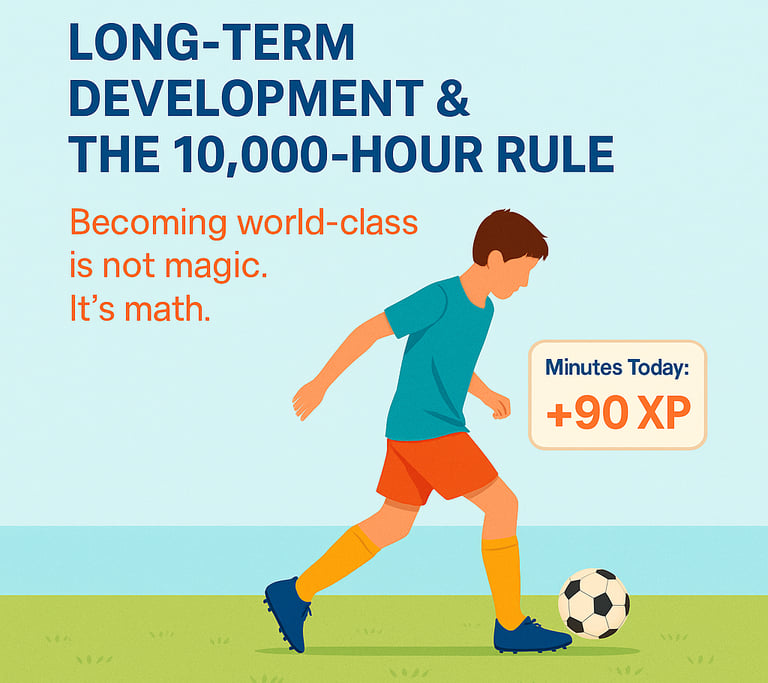
Becoming world-class is not magic. It's math.
Mastery takes time — that’s true in music, science, and especially in sport.
Research shows that becoming truly elite in any complex skill usually requires around 10,000 hours of focused, high-quality practice.
This is known as the 10,000-Hour Rule, popularized by psychologist K. Anders Ericsson and later Malcolm Gladwell.
What makes these hours matter?
That means:
Practicing with intention and goals
Getting feedback and adjusting
Repeating core skills under pressure
Going just beyond your comfort zone
In football, that means more than just showing up. It means showing up with focus, again and again, for years.
Because the truth is simple:
⚠️ There is no shortcut to mastery. Not in football. Not anywhere.
But there is a formula: Consistency × Time × Quality = Growth


Let's break it down:
10,000 hours = ~3 hours per day, every day, for 10 years.
It’s the difference between playing the game and owning the game.
It's not about talent. Talent gives you a head start. But it’s work that gets you to the finish line.
And most importantly: these hours don’t need to be rushed — they need to be collected, step by step.
⚽️ 10,000-Hour Rule in Football
In football, 10,000 hours is just the foundation, that’s the starting point — not the finish line. Here’s why football demands even more:
🦵 1. Feet, Not Hands
Most sports rely on hands.
Football relies on feet, which are much harder to train for fine control.
Manipulating the ball with your feet isn’t natural — it takes thousands of extra repetitions just to gain basic mastery.
🔁 2. Fewer Actions Per Match
In a 90-minute game, a player might touch the ball for only 1–3 minutes total.
On average: 30–50 touches per match, compared to hundreds during a single training session.
That means: matches don’t give enough repetitions to build skills fast.
So players need a huge number of hours in training just to balance the low repetition in real games.
🏆 3. The Competition Is Brutal
Everyone wants to make it.
And the level of competition globally is insane — especially in football.
The more competitive your region, academy, or level… → the more hours you'll need to outwork the others.
⚠️ Bottom Line:
In football, 10,000 hours is not a guarantee — it’s the minimum investment.
Mastery may take 12,000 or even 15,000 hours, depending on your position, your training quality, and who you're up against.
🔄 Translating the 10,000-Hour Rule into EMC XP
The EMC (Every Move Counts) system is built on XP (experience points), which translates the 10,000-hour target into XP.
The exchange rate is simple:
1 minute = 1 XP
10,000 hours = 600,000 XP
Why not just count hours?
Because kids don’t think in hours — but they’re used to gaining XP points in computer games.
Why XP works:
• ✅ It’s visible — You can track your progress like a score.
• ✅ It’s flexible — All kinds of activities count: team practice, matches, free play, even watching games.
• ✅ It’s motivating — 5,000 XP feels like progress. 83 hours... not so much.
• ✅ It creates momentum — From session to session, you see your XP grow.
• ✅ It feels like a game — Which keeps kids engaged and coming back.


🎯 How XP Points Are Accumulated
Different activities. Different learning. All count.
In EMC, XP is earned from all football-related activity, not just official training.
Why? Because real development comes from variety — and experience builds everywhere.
Here’s how each activity contributes:
⚽ 1. Team Training (1 min = 1 XP)
The foundation of long-term growth.
These are the club or academy sessions with coaches and teammates — the core hours that shape a player's technical, physical, and tactical base.
Team training builds discipline, teamwork, repetition, and structure.
Though every player shares the field, it teaches system play, movement patterns, and game habits.
It's the XP backbone of any football journey.
🧠 2. Individual / Small-Group Training (1 min = 2 XP)
The fastest way to develop technique.
Solo or small-group sessions give more touches per minute, more focus, more direct feedback.
A player can repeat a key move 50–100× in a single drill — far more than in team or match settings.
It’s the most efficient way to close gaps or gain edges.
In XP logic: same minute, double the gain. Why? Because results come faster.
🏟 3. Match Play (1 min = 1 XP + Action Bonuses)
Where learning becomes real.
In games, players apply what they’ve learned — under time pressure, against real opponents.
Game time builds decision-making, pressure tolerance, and tactical flexibility.
That’s why match XP = minutes, but we add bonus XP for actions:
⚽ Goal = +3 XP
🎯 Assist = +1 XP
🛡 Interception / Block / Recovery = +1 XP
Impact matters — not just presence.
🧩 4. Watching & Analyzing Football (1 min = 0.25 XP)
Experience for the brain.
Watching matches (TV, YouTube, stadium) helps players:
recognize patterns
understand positioning
anticipate decisions
sharpen football IQ
Tactical awareness is a huge part of modern football — and it’s built by observation.
Even football video games can help younger players learn roles, formations, timing.
These minutes don’t train the body — but they definitely train the mind.
🛝 5. Free Play (1 min = 0.5 XP)
Where creativity lives.
Pickup games in the park. Street football. Backyard juggling.
No structure. No coach. No pressure. Just love for the game.
These moments:
build improvisation
improve ball control
allow freedom to try and fail
Historically, many legends were raised in free play environments.
We count these minutes as XP because they shape instincts — and fuel joy.
No single drill builds a footballer — but together, all five do.
Balanced development is the real secret. None of the five XP pillars can replace another, no matter how many hours you put into just one. Only in combination do they create real magic — that’s where every move counts.


📊 XP by Age: How Many Points to Collect per Phase
Small gains. Big journey.
If 10,000 hours = 600,000 XP, the question is:
How do you realistically collect that over a 15-year journey?
We broke it down by age, matching realistic weekly loads to each stage of development.
🟢 Ages 6–9: Fundamentals & Fun
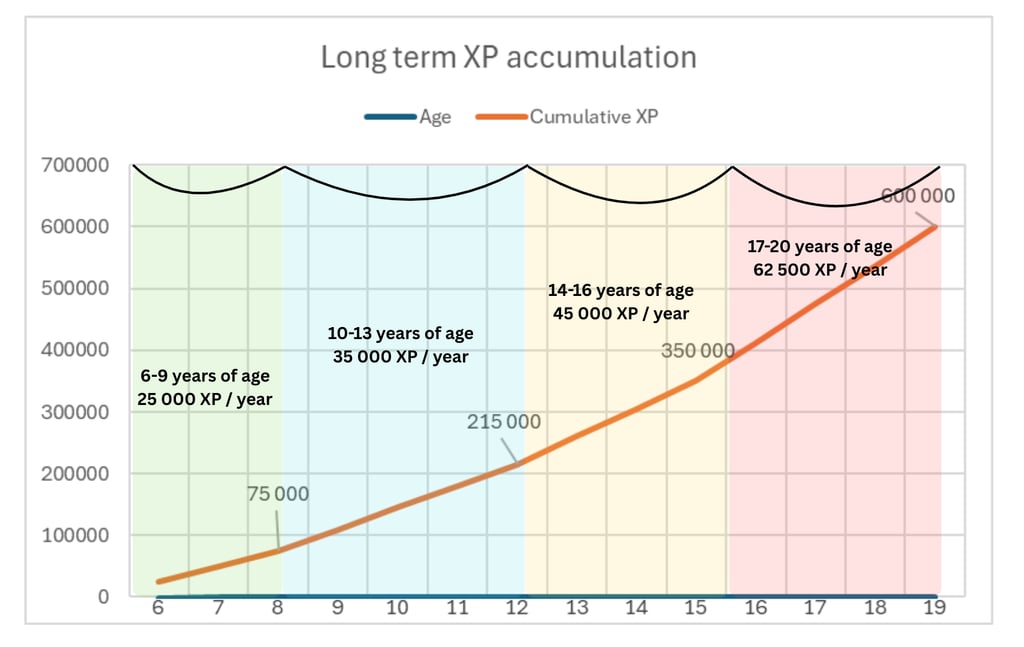
Target: ~25,000 XP/year → ~75,000 XP total
Kids typically train ~3× per week (3–4 hours total/week).
That equals ~150 hours/year from team training → ~9,000 XP.
Add free play (e.g., 2 hrs/week × 0.5 XP/min) → ~3,000–4,000 XP.
A few matches (tournaments) + 1 individual session/week = 8,000–10,000 XP.
Estimated XP/year: 22,000–28,000
These years are about joy, touch repetition, and early movement patterns.
🔹 By age 10, a player can reach ~75,000 XP — the first milestone on the road to mastery.
🔵 Ages 10–13: Structure & Skill Expansion
Target: ~35,000 XP/year → ~140,000 XP total
Training increases to 4–5×/week (~5–6 hours/week) = ~15,000 XP/year.
Regular matches (~40/year × 60 min = 2,400 min) = 2,400 XP, plus actions (~800–1,000 XP).
Individual sessions (1×/week × 60 min × 2 XP) = ~6,000 XP/year
Free play + watching games (1–2 hrs/week) = 4,000–5,000 XP/year
Estimated XP/year: ~35,000–38,000
🔹 By age 14, players can reach ~215,000 cumulative XP.
🟠 Ages 14–16: High-Performance Development
Target: ~45,000 XP/year → ~135,000 XP total
5+ weekly sessions (~8–10 hrs/week) = ~25,000–30,000 XP/year
Matches (~40/year × 80–90 min) = 3,200–3,600 XP + bonuses (~1,000 XP)
Extra physical + technical sessions (2 hrs/week × 2 XP/min) = ~12,000–14,000 XP/year
Watching football, match review, etc. = ~2,000–3,000 XP/year
Estimated XP/year: ~45,000–48,000
🔹 By age 17, players can surpass ~350,000 XP.
🔴 Ages 17–20: Nearing Mastery
Target: ~62,500 XP/year → ~250,000 XP total
Daily training (10–12 hrs/week) = ~30,000–35,000 XP/year
Matches (~40/year × 90 min) = 3,600 XP, with bonus XP = ~5,000+ total
Double sessions (strength + tactical) + recovery = 15,000–18,000 XP/year
Tactical video study, pro match analysis = 2,500–4,000 XP/year
Estimated XP/year: ~60,000–65,000
🔹 By age 20, a focused player can approach or surpass the 600,000 XP milestone.
📱 Example of One-Week Microcycle for a 6–9 Year Old Player
Target: 25,000 XP / Year
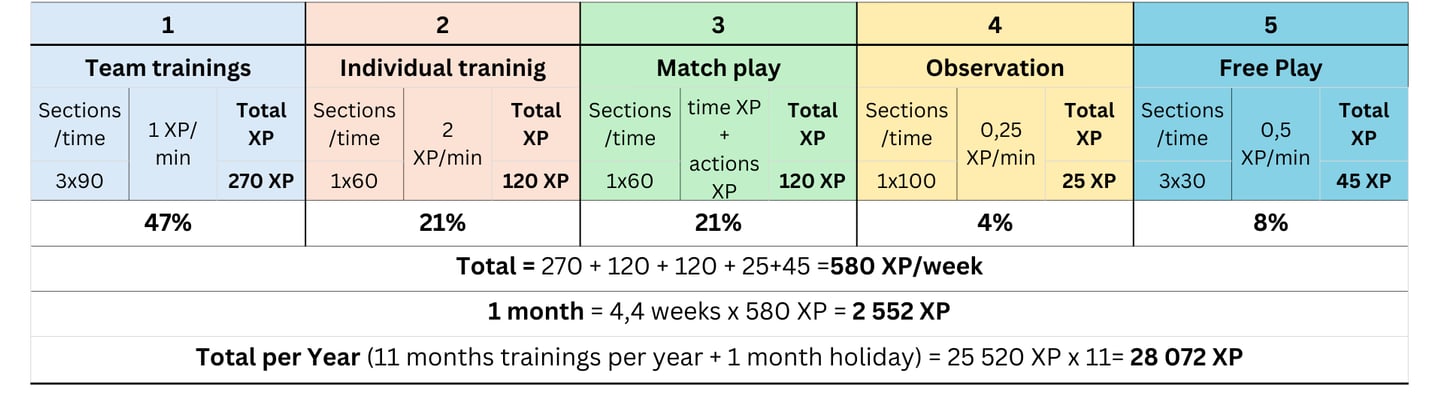
***This is just an example to illustrate the proportions and balance across different activity types. Every child’s weekly plan may differ based on the approach of their coach, club, or academy. It will vary — and this example should not be considered a strict model or standard. The purpose is simply to show how XP points can be accumulated throughout a typical week.
📱 The Role of EMC in the XP Journey
Helping families, coaches, and players stay on track — and enjoy the journey.
The path to football mastery is long.
And honestly — it’s tough.
Over 95% of players will never reach the professional level.
More than 85% won’t even make it past the age of 14–16 in structured football.
That’s the reality.
But EMC isn’t here just for the 5%.
Our mission is to help every young player enjoy the journey, stay motivated, and grow through the process — not just chase the finish line.
⚠️ What many families don’t realize:
To reach the elite level, the sacrifices are massive — in time, consistency, energy, money, and emotions.
And still... there are no guarantees.
Some will face injuries.
Others will burn out.
Some will lose motivation just before the final step.
That’s why EMC was built — to support the player, the parent, and the coach
at every stage, and to show what really matters along the way.
🎯 What EMC Does — Today
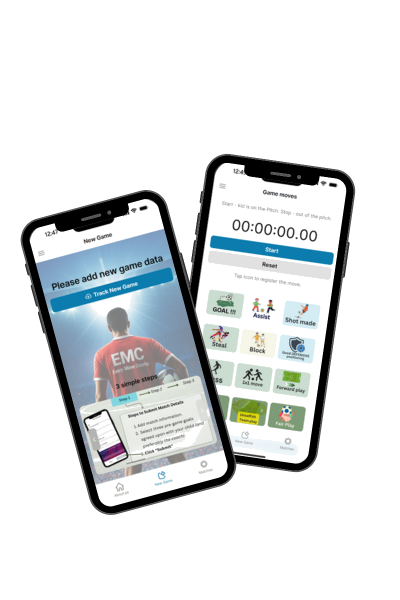
Our first version (MVP) is focused entirely on grassroots youth football, and specifically on match activity.
We track what happens on the pitch: minutes, goals, actions, and XP.
We help parents see their child’s growth — not just the scoreline.
We create XP feedback loops that motivate kids after every game.
And we turn those numbers into long-term insight.
Because if you know where you are — you can understand how far you’ve come, and where to go next.
🧭 XP is your map. EMC is your navigation system.
👨👩👧👦 For Parents: Know What Matters
As a parent, you want to support your child. But sometimes, you don’t see the full picture. You wonder:
Was this tournament worth it?
Would a private session make more impact?
Is my child actually progressing?
EMC helps parents:
Track XP over time
Compare match/tournament value
Encourage players with data, not just praise
Stay connected to the game — not just the sidelines
🧑🏫 For Coaches & Academies: Align the Vision
We know coaches often feel misunderstood. Parents expect results. Academies want development. Kids want fun.
EMC can help bridge that gap:
Coaches can set XP goals
Parents can track and reinforce them
Everyone speaks the same language of progress
It’s not about stats — it’s about alignment.
🌱 The Vision: A Full XP-Based Ecosystem
This is just the beginning.
Match XP is the first step.
Next: individual training, team sessions, free play, video analysis — all tracked, all connected.
Our goal is to create a unified XP system that shows every move that matters.
Just like a GPS — you need to know where you are now, to choose where to go next.